
BEN LANGWIEDER - Mark and Golaud
2026 | BEN LANGWIEDER
MARK AND GOLAUD
MONTREAL
Jan 30 - Mar 21, 2026
Opening Reception: Friday January 30, 2026, from 5pm - 7pm.

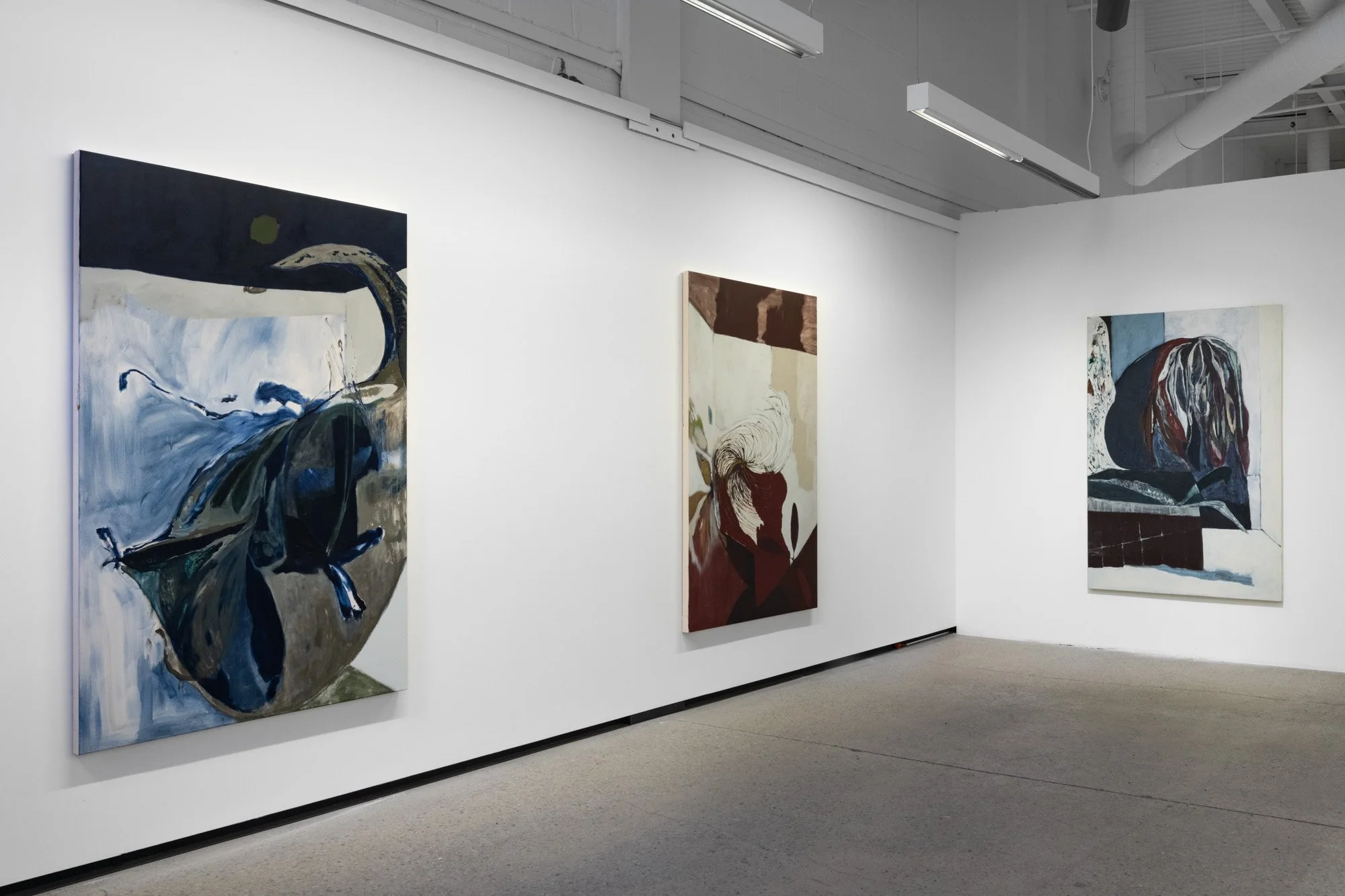
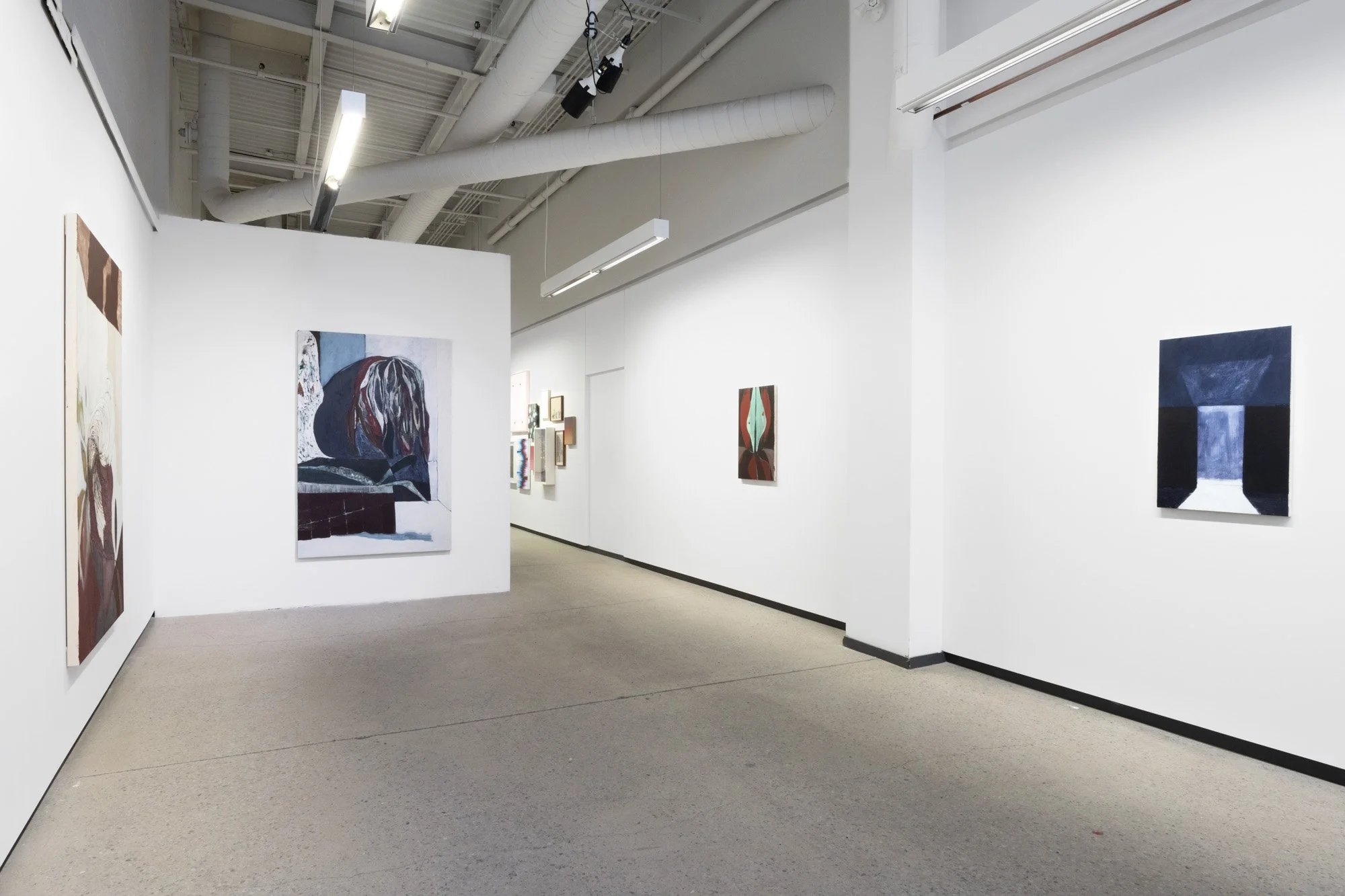


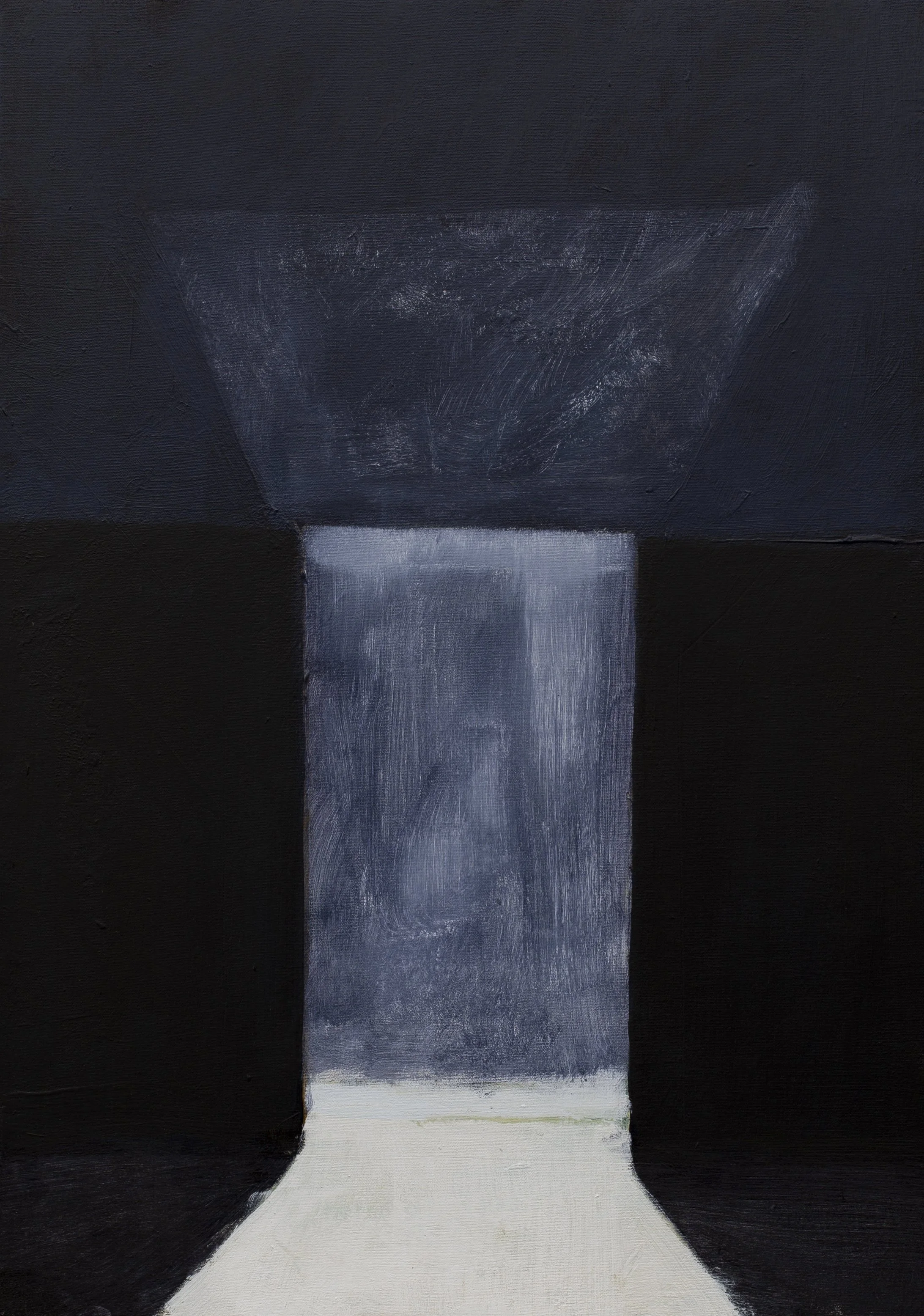
Ben Langwieder, Golaud, 2025, Acrylic on canvas, 21" x 31"
Blouin Division is pleased to present Mark and Golaud, an exhibition by Ben Langwieder in Montreal’s Project Space.
P1
You’ve probably experienced more instances of triangular desire than you think. Remember learning attraction as a young teen? Everyone had a crush on the same person, because we didn’t know where to place our longing, let alone what it meant to want someone. We needed mediation – a nod of approval – to know where it belonged.
The geometry of emotion makes me wonder: what does it mean to visualize desire? It pops up unexpectedly, often where it shouldn’t, fires off in random directions, and can disappear just as mysteriously. Sometimes it feels dense and full, the realest thing you’ve ever felt – only to collapse into a heap of smoking mirrors. It is smoke and mirrors, flimsy play: to want is necessarily not to have. When two points move toward each other, they form a line – a closed circuit of giving and receiving. A triangle, though, opens inside itself an empty space where all sorts of misdirection and performance can take place. It opens up a stage.
P2
My most memorable encounter with a love triangle was in a book. When I was 18, I was assigned Goethe’s The Sorrows of Young Werther (1774), and I loved it so much I scared my parents. Sensitive Werther falls in love with Lotte, who is engaged to Albert; eventually unable to bear it, Werther kills himself. Sorrows sharpened my taste for the sublime beauty of my own torment and made pursuing it feel morally justified. I finished reading and bounded off to the boys’ dorm to throw myself on the altar of certain rejection. The hormonal emotionality of Sorrows anticipates high-Romantic works like Wagner’s Tristan and Isolde (1859) – a major inspiration for this show, alongside Debussy’s Pelléas et Mélisande (1893). But really, I recall this opera of my teenaged imagination in response to Ben’s paintings. Surrounded by vague plains of paint, concentrated knots of gesture suggest a parallel between visual focus and emotional fixation. I consider the act of looking, the blinding brightness of my own desire, and suddenly every expressive burst and moment of stubborn interiority becomes self-conscious on a shoddy cardboard stage.
P3
Mark and Golaud brings to mind a triangulation of a different sort – because the relationship between the three of us has always been heavily mediated by what we see, read, watch, and listen to. One’s relationship to art will always benefit from having people to talk about it with.
-Emma Dollery and Maya Burns